
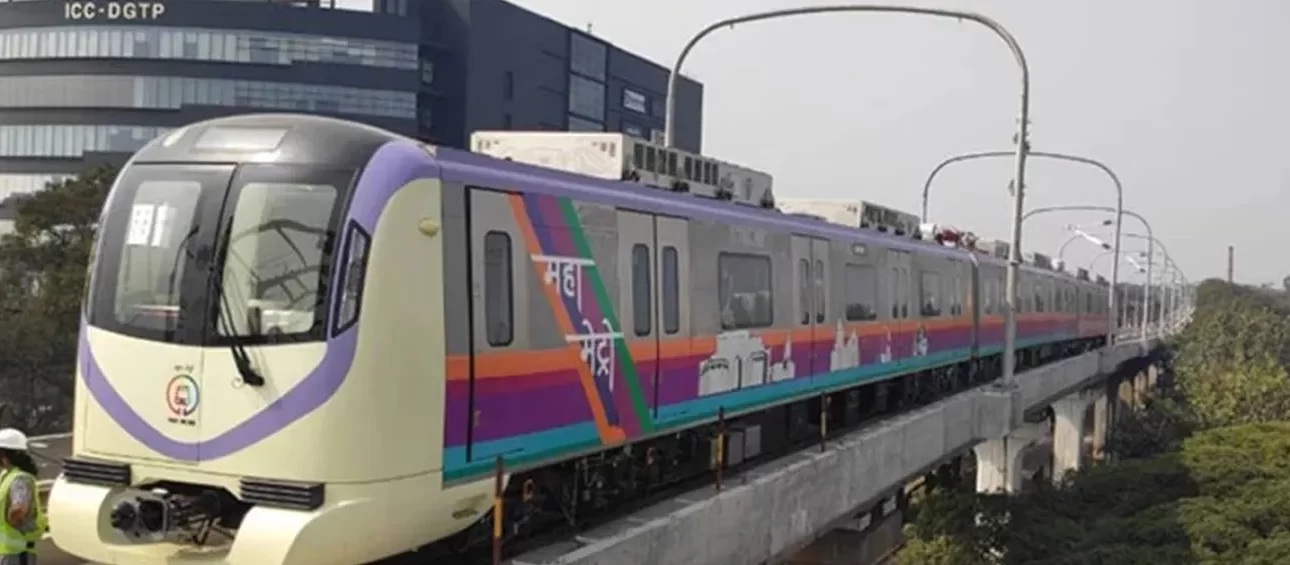
Pune’s real estate market has always thrived on infrastructure upgrades, considering, Pune until the last decade was a quaint little town, known for its proximity to Bombay. But over the years. with its educational institute expansion, area expansion and IT boom – Pune is now one of the most trending cities on the real estate charts. To add to that, Pune Metro project is its latest game-changer. As the city’s east-west and north-south corridors come alive, investors are focusing sharply on Kharadi, one of Pune’s fastest-growing hubs. With the Hinjawadi–Shivajinagar Metro Line-3 expected to directly benefit Kharadi by 2026, property buyers are asking one key question: how much of an impact will the Metro make on real estate values here?
The short answer: a big one. Global evidence and local data suggest that property prices near Metro stations appreciate 10–25% annually, with cumulative gains of 25–80% in 3 years. Kharadi, already a magnet for GCCs, IT professionals, and developers, is set to gain the most. This blog breaks down the Metro’s quantitative impact on property prices, its ripple effects on leasing, livability, and the challenges investors should weigh before making their move.
Overview of Pune Metro Expansion
Currently, the Pune Metro network is being developed in phases, with two operational lines (Line-1: Vanaz–Ramwadi, Line-2: PCMC–Swargate) and Line-3, the 23-km Hinjawadi–Shivajinagar corridor, under rapid construction. According to planning updates, Line-3 is expected to be completed by March 2026, directly improving Kharadi’s eastward connectivity through feeder routes and future extensions.
An equally important aspect is the Transit-Oriented Development (TOD) policy being rolled out. Under TOD, areas within 500 metres of Metro stations enjoy higher Floor Space Index (FSI) allowances. This means developers can build taller and denser projects, creating a new wave of residential and commercial supply in high-demand zones like Kharadi. For buyers, TOD ensures access to mixed-use developments where offices, homes, and retail co-exist around a Metro ecosystem.
Property Price Appreciation in Kharadi
Infrastructure projects directly shape property appreciation, and Metro corridors are a textbook case. Studies in Indian metros like Delhi, Bengaluru, and Mumbai reveal 10–25% annual property appreciation within walking distance of stations, outpacing city averages. Over a 3-year span, this can translate to 25–80% cumulative growth.
In Kharadi, the story is already unfolding with an increase in prices. Residential property rates that were about ₹6,000–7,000 per sq. ft. just 3–4 years ago are now averaging ₹8,500–9,500 per sq. ft.. Industry experts expect a further 20–25% surge in the next 3–5 years, accelerated by the Metro’s commissioning.
For context and better understanding:
Hinjawadi, already connected by Line-3, has seen commercial-led price spikes but slower residential gains due to congestion.
Wagholi, though affordable, lacks large-scale infrastructure, and property prices here remain 20–25% lower than Kharadi.
The result? Kharadi balances affordability with premium appreciation potential, making it one of Pune’s most promising investment bets.
Ripple Effects on Leasing & Commercial Demand
While residential demand rides on end-users, the commercial market in Kharadi is equally poised to benefit from the Metro. In H1 2025, Pune saw 38–51 lakh sq. ft. of office leasing, with Kharadi among the frontrunners. The presence of EON IT Park, World Trade Center, and SEZ hubs already makes it a natural choice for global companies and IT firms looking to set up office in Pune.
To add to this, the Metro will only enhance this appeal. Shorter commutes expand the catchment area for talent, while reducing attrition for employers. Global Capability Centers (Barclays, Credit Suisse, TCS, etc.) are already ramping up operations here, and the Metro is expected to further attract flexible workspaces and co-working providers. This ensures sustained commercial absorption and rental growth, which in turn fuels residential demand from professionals.
Lifestyle & Livability Gains
Beyond financial metrics, the Metro promises to transform Kharadi’s quality of life. Reduced commute times to Shivajinagar and Hinjawadi mean professionals save hours daily, which translates into higher productivity and better work-life balance.
The Metro also supports environmental goals by cutting vehicular traffic and emissions, aligning with Pune’s Smart City Mission. For families, easier access to schools, hospitals, malls, and cultural hubs like Koregaon Park boosts Kharadi’s livability index. In short, the Metro positions Kharadi not just as an investment hub, but as a well-rounded urban community.
Challenges and Urban Planning Concerns
While the Metro’s positives are undeniable, investors should also note a few challenges:
Height Restrictions: Properties near Metro corridors may face building height caps, limiting skyline projects in some pockets.
Amenity Space Trade-offs: Higher FSI under TOD can mean denser projects, occasionally compromising open spaces if not well-planned.
Competitive Micro-markets: Areas like Baner, Balewadi, and Hadapsar are also witnessing infrastructure upgrades, creating healthy competition for Kharadi.
Prudent investors must balance enthusiasm with caution, focusing on developer track record, project approvals, and urban planning compliance.
Buyer Considerations & Future Watchpoints
The Pune Metro is a watershed moment for the city, and Kharadi sits at the epicentre of its impact. With property prices already rising and rental yields set to climb, early movers in Kharadi stand to benefit the most.
What investor should takeaways from this:
Target projects within 500 metres of upcoming Metro stations for maximum price and rental upside.
Prioritise RERA-compliant developers with proven delivery track records.
Watch for policy changes in TOD and FSI norms, as these will determine future density and livability.
Consider both residential and commercial assets to balance appreciation with steady rental flows.
The verdict: If you are considering Pune real estate in 2025, Kharadi near the Metro corridor should be at the top of your shortlist.
FAQs
Q1. How much have Kharadi property prices risen due to the Metro in the last 3 years?
From ₹6,000–7,000/sq. ft. to ₹8,500–9,500/sq. ft.—a 30–40% rise.
Q2. When will Metro Line 3 be completed and how will that affect Kharadi?
Expected by March 2026; it will directly enhance east-west and north-south connectivity, spurring further appreciation.
Q3. What is the TOD and FSI benefit near Kharadi Metro stations?
Transit-Oriented Development offers higher FSI within 500m of stations, enabling taller, mixed-use projects.
Q4. Are there any regulatory constraints for high-rise buildings near Metro in Pune?
Yes, certain height restrictions apply around Metro corridors for safety and planning balance.
Q5. How will Metro expansion influence rental yields in Kharadi?
Improved connectivity and office demand are expected to push yields upward, benefiting buy-to-let investors.